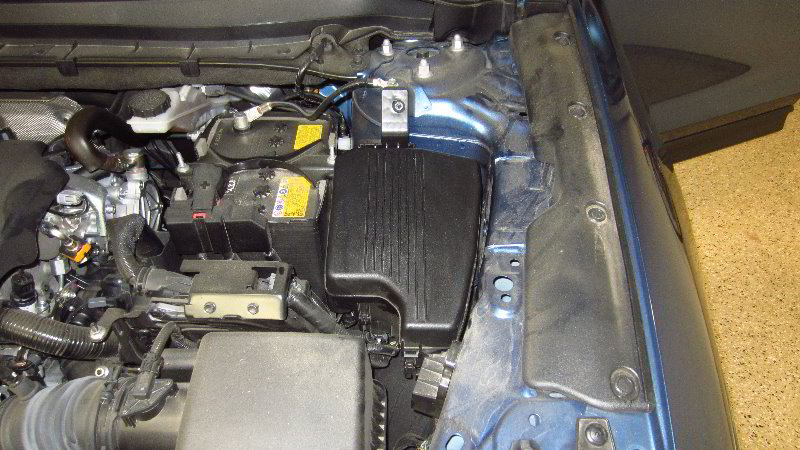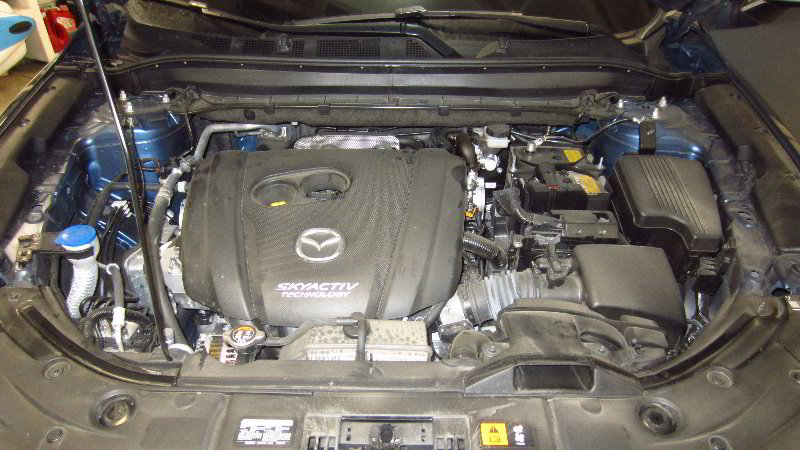
This automotive maintenance tutorial was specifically written to assist owners of the second generation (2017, 2018, 2019, 2020, 2021 and 2022) Mazda CX-5 SUV in checking or changing a blown fuse or a faulty relay in either the engine bay or interior passenger compartment electrical panels.
Owners of other Mazda vehicles such as the CX-3, CX-30, CX-7, CX-9, Mazda3, Mazda6, MX-30, MX-5 Miata, Mazda2, CX-4, CX-8 and BT-50 may also find these DIY instructions to be helpful.
This 2019 Mazda CX-5 is equipped with “low profile” fuses.
Please check the old fuses in your vehicle before you purchase new fuses!
Some Mazda vehicles may either be equipped with the older mini blade fuses or the newest style Micro2 fuses.
No tools are required to access and replace the fuses. There should be a white plastic fuse puller tool included on the underside of the engine bay electrical box cover.
If the tool is missing, you could use a pair of needle nose pliers with rubber insulated handles for extra safety.
Make sure the ignition is turned to the “OFF” position. An optional step is to disconnect the “-” negative 12 volt car battery terminal to avoid accidental electrical contact or other issues while replacing a fuse or a relay.
 Please proceed with caution and at your own risk.
The first two steps are to open the hood and then move to the right (driver) side of the SkyActiv-G 2.5L I4 engine bay.
(The procedure should be the same or very similar for vehicles with the 2.0L I4, 2.5L turbocharged I4 and 2.2L twin turbo diesel engines.)
The primary electrical box is located to the right of the 12V automotive battery, behind the engine air filter housing and just in front of the suspension tower.
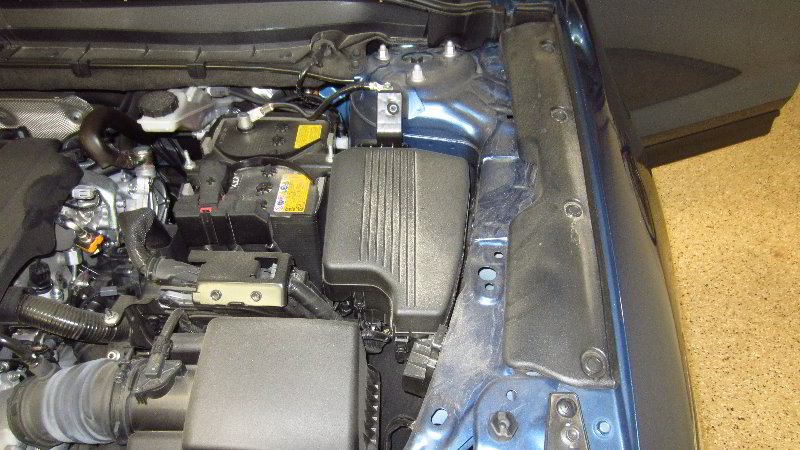
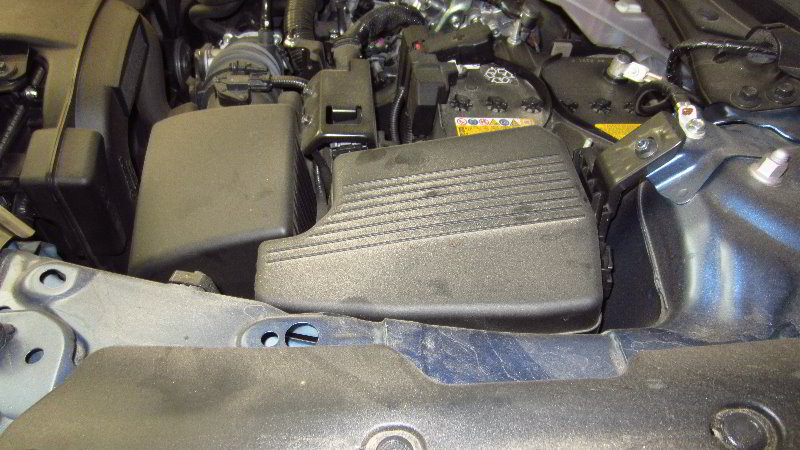

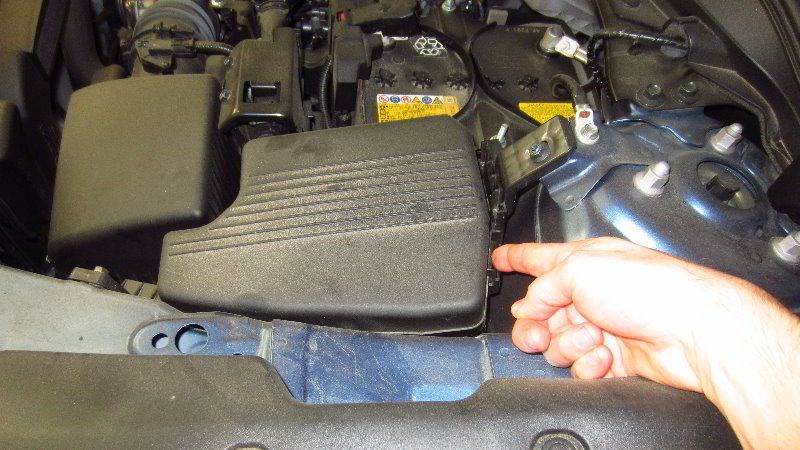
Locate the release tab on the rear edge of the engine bay fuse box (close to the shock tower).
Push in the release tab and lift the cover off the top of the primary electrical panel.
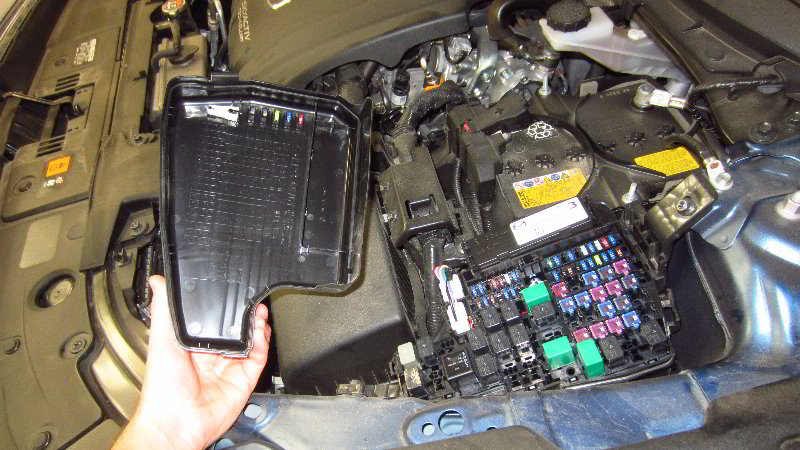
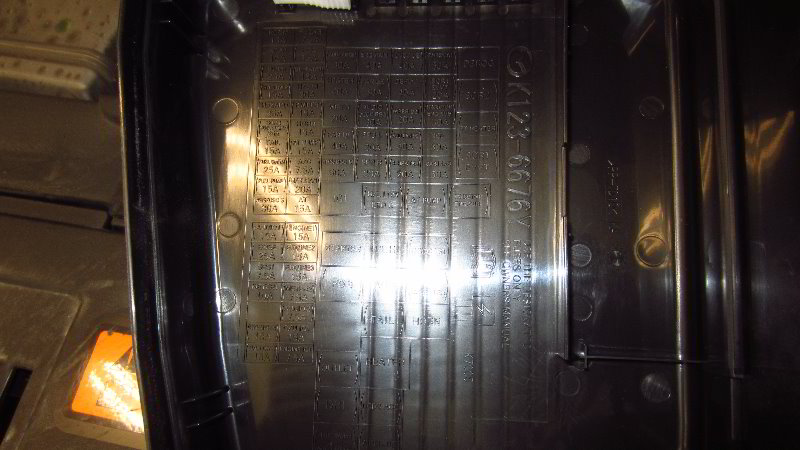
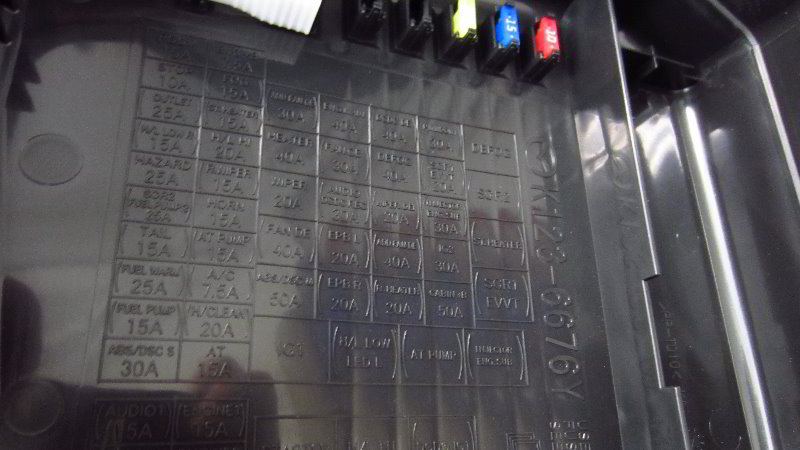
Turn over the cover to view the fuse and relay location diagram. There is also another fuse location chart in your owner’s manual.
There should be a white plastic fuse pulling tool and a few spare fuses attached to the underside of the cover.
Set the cover aside in a safe place.

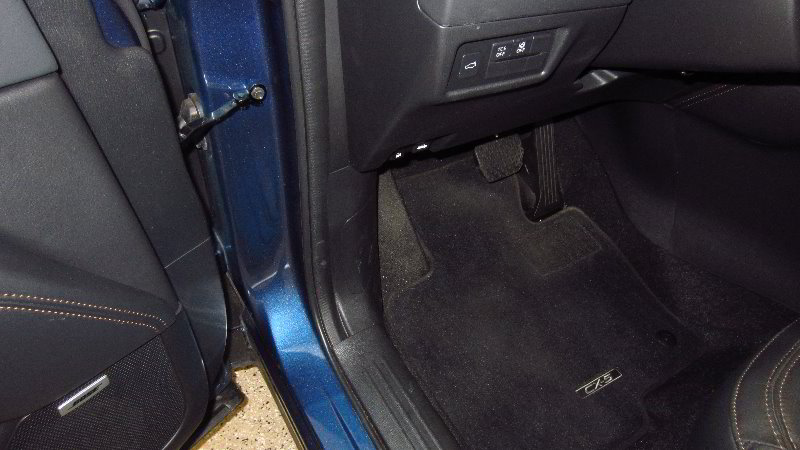
The interior passenger compartment electrical panel is located under the dashboard and near the driver’s foot rest (or “dead pedal”).
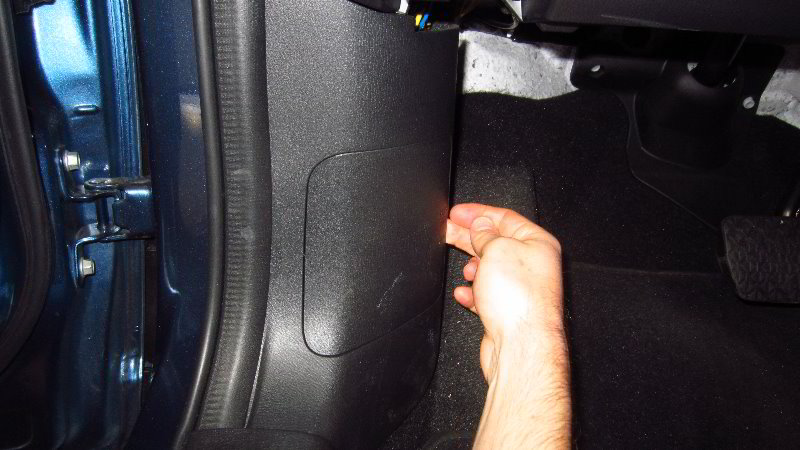
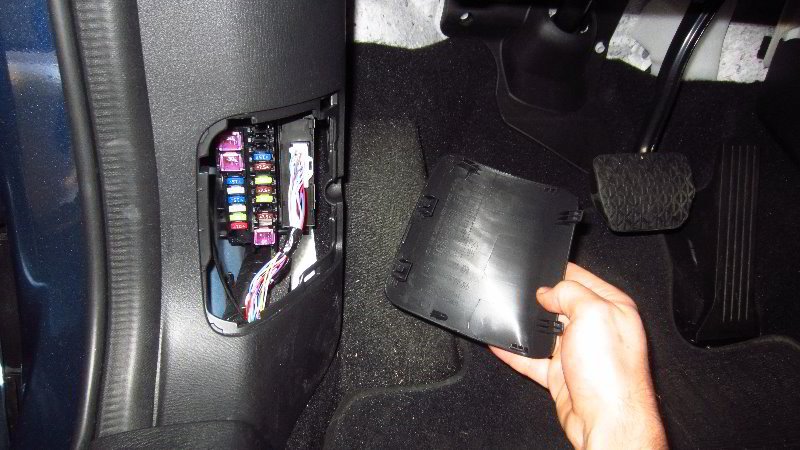
Pull out the inner edge of the access cover to remove it from the trim panel.
There is a fuse location diagram on the back side of the cover.
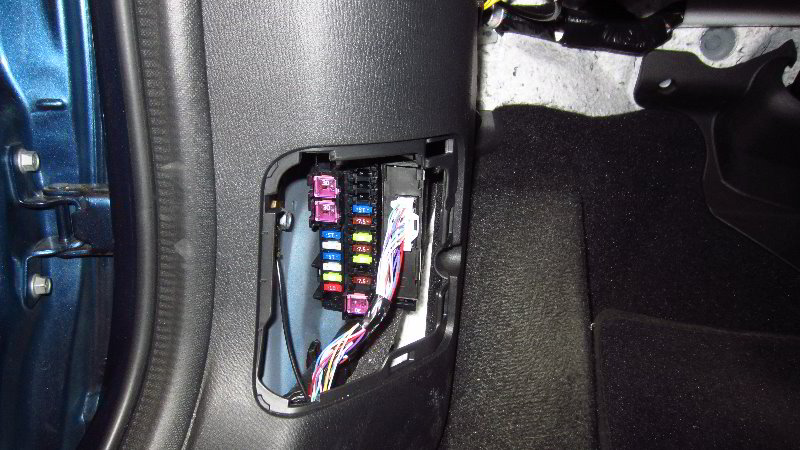
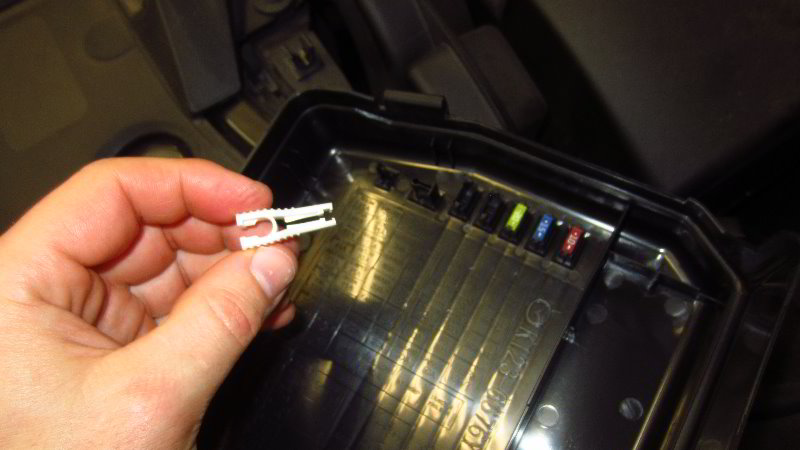
Pinch the end of the tool to open the jaws.
Place the jaws over the old fuse that you’d like to check or change.
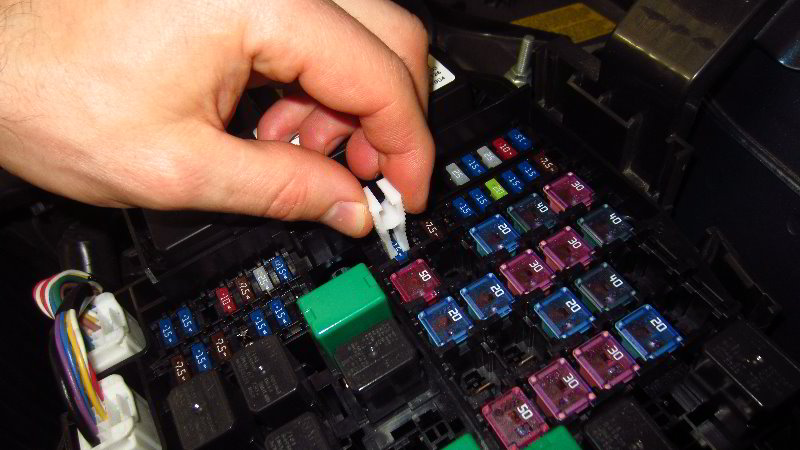
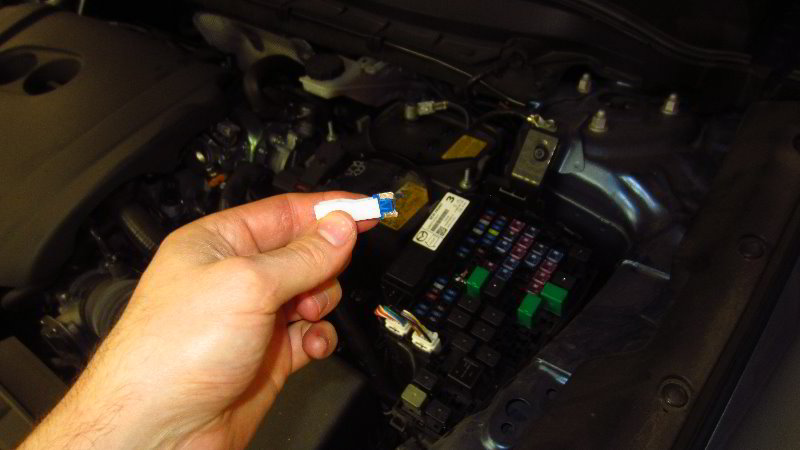
Pull the old fuse straight out of the socket.
To check the condition of the old fuse, hold it up to a light source.
If the thin metal bar or “strip” in the translucent center of the old fuse appears to be burnt, broken or shriveled up, the old fuse is most likely “blown” and should be replaced with a new one.
If the metal band in the middle of the old fuse appears to be intact, it might still be in good working condition.
Since new fuses are so inexpensive, I still recommend changing the fuse as part of your electrical problem troubleshooting process.
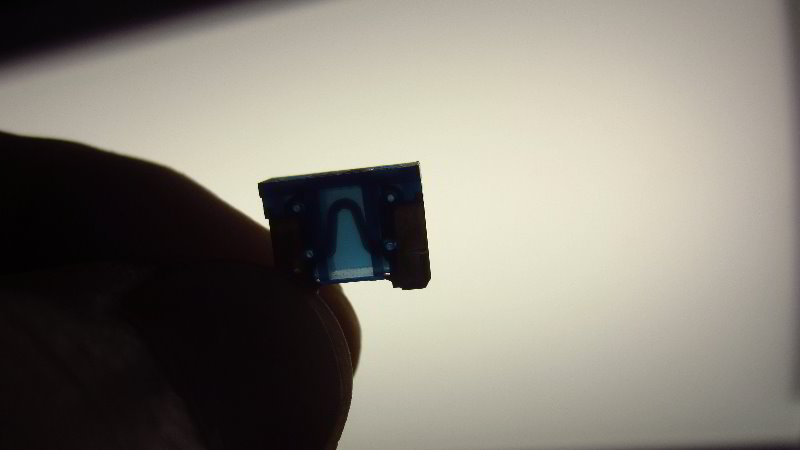


Push a new “low profile” fuse of the same amperage rating (e.g. 5A, 10A, 15A, 20 Amps) straight into the socket.
If you would like to add a hard wired 12 volt power source for an automotive accessory such as a Bluetooth audio adapter unit, a radar detector, an auxiliary gauge (boost, transmission temperature), a dash camera / dashcam or a GPS unit, install an “Add-A-Circuit” fuse tap holder.
If you suspect that a faulty relay is the source of your issue, the easiest way to troubleshoot the problem is to just simply replace the old relay with a new one of the same amperage rating.
If you have a digital multimeter tool, you can test the old relay.
To avoid having to buy a new relay just to troubleshoot the problem, find another relay of the same amperage rating that you can temporarily swap with the one that might be faulty in order to quickly test it.
To remove an old relay, grasp it with the needle nose pliers and carefully pull it straight out.
To replace the access cover for the interior fuse block, first reinsert the two tabs on the outer edge into the opening.
Then gently push in the retaining clips on the inner edge of the cover.


Replace the fuse puller tool by pushing it into the holder on the underside of the fuse box cover.
Push the cover straight on to the engine bay electrical box.
You should feel or hear the retaining clip “click” securely into place.
Test the electrical component that you were having problems with such as the A/C (air conditioning) system, the power windows, power driver’s seat, stereo system (radio), horn, interior lights, headlights, tail lights, windshield wipers, etc.
If you are still having the same issue, there may be a shorted out wire (due to worn away insulation or rodent damage) or the electrical component itself needs to be replaced.
Please check out all of my 2017-2022 Mazda CX-5 DIY Repair & Maintenance Guides.